SEO is one of the most effective digital marketing strategies for increasing your website’s visibility on search engines like Google. Whether you’re a business owner, student, blogger, or entrepreneur, understanding SEO can help you attract more visitors, generate leads, and grow your online presence without relying solely on paid advertising.
What Is SEO?
Search Engine Optimization (SEO) is the process of optimizing your website so that it ranks higher in search engine results pages (SERPs) for relevant keywords. The higher your website ranks, the more organic (non-paid) traffic it can receive.
For example, if someone searches for “best digital marketing agency in Kanpur”, websites that have been properly optimized for that keyword are more likely to appear on the first page of Google.
Why Is SEO Important?
SEO provides long-term benefits that help businesses grow online. Here are some key advantages:
- Increases organic website traffic
- Improves search engine rankings
- Builds trust and credibility
- Enhances user experience
- Generates quality leads
- Delivers a higher return on investment than many traditional marketing methods
- Supports long-term business growth
How Do Search Engines Work?
Search engines like Google use automated programs called crawlers or bots to discover and index web pages. The process typically involves three stages:
1. Crawling
Search engine bots scan websites and discover new or updated pages by following links.
2. Indexing
The discovered pages are analyzed and stored in Google’s index, making them eligible to appear in search results.
3. Ranking
When a user performs a search, Google’s algorithms evaluate hundreds of ranking factors to determine which pages provide the most relevant and helpful answers.
Types of SEO
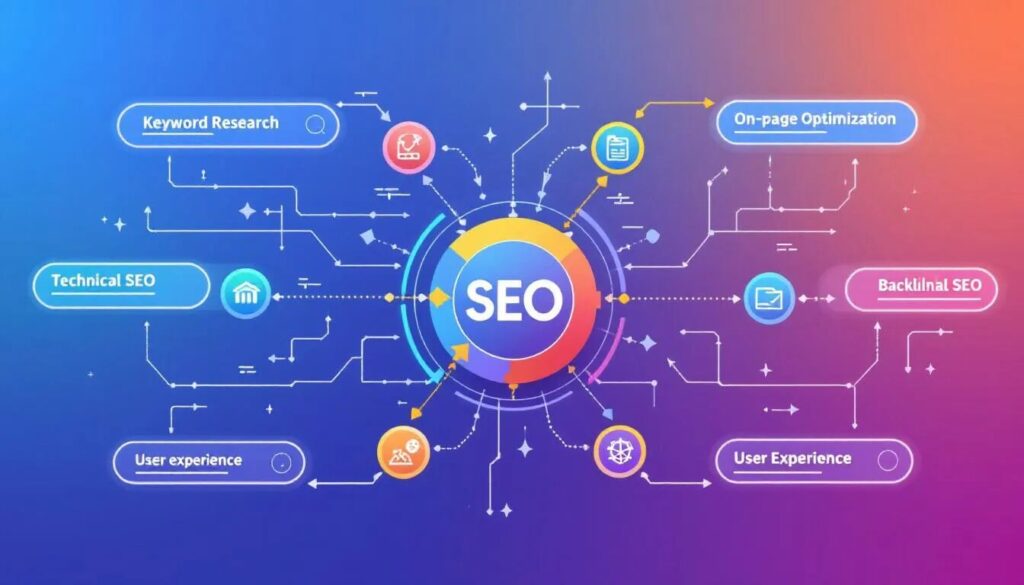
1. On-Page SEO
On-page SEO focuses on optimizing elements within your website.
Key activities include:
- Keyword research and placement
- Optimized page titles and meta descriptions
- High-quality, original content
- Header tags (H1, H2, H3)
- Image optimization with alt text
- Internal linking
- URL optimization
2. Off-Page SEO
Off-page SEO improves your website’s authority through external signals.
Common techniques include:
- Quality backlink building
- Guest blogging
- Social media promotion
- Brand mentions
- Influencer collaborations
- Local citations
3. Technical SEO
Technical SEO ensures that search engines can crawl and index your website efficiently.
Important technical factors include:
- Fast page speed
- Mobile-friendly design
- HTTPS security
- XML sitemap
- Robots.txt optimization
- Canonical tags
- Structured data (Schema Markup)
- Fixing broken links
4. Local SEO
Local SEO helps businesses appear in location-based searches.
Examples include:
- Optimizing your Google Business Profile
- Collecting customer reviews
- Using local keywords
- Building local citations
- Maintaining consistent business information across directories
Essential SEO Ranking Factors
Although Google considers hundreds of ranking signals, some of the most important include:
- High-quality content
- Search intent matching
- Relevant keywords
- Page loading speed
- Mobile responsiveness
- Website security (HTTPS)
- User experience (UX)
- Backlink quality
- Internal linking
- Domain authority
Keyword Research: The Foundation of SEO
Keywords are the words and phrases users type into search engines. Choosing the right keywords helps your content reach the right audience.
Examples:
- SEO services
- Digital marketing agency
- Website development company
- Best SEO company in Kanpur
- Search Engine Optimization Guide
Use a mix of short-tail and long-tail keywords naturally throughout your content.
Best SEO Practices
To improve your website’s performance:
- Publish original, valuable content regularly.
- Focus on solving users’ problems.
- Optimize every page for a primary keyword.
- Write compelling meta titles and descriptions.
- Improve website speed.
- Make your website mobile-friendly.
- Add internal and external links.
- Optimize images.
- Build high-quality backlinks.
- Monitor performance using analytics tools.
Common SEO Mistakes to Avoid
Many beginners unknowingly make mistakes that can hurt rankings.
Avoid:
- Keyword stuffing
- Duplicate content
- Buying spammy backlinks
- Ignoring mobile optimization
- Slow-loading pages
- Missing title tags and meta descriptions
- Poor website structure
- Publishing thin or low-quality content
Useful SEO Tools
Some popular SEO tools include:
- Google Search Console
- Google Analytics
- Google Keyword Planner
- Google Trends
- Ahrefs
- SEMrush
- Moz
- Screaming Frog SEO Spider
- Ubersuggest
- Yoast SEO (for WordPress)
These tools help you analyze performance, discover keywords, identify technical issues, and track rankings.
Is SEO Better Than Paid Advertising?
SEO and paid advertising both have their place in a digital marketing strategy.
SEO
- Long-term results
- Sustainable organic traffic
- Higher credibility
- Better ROI over time
Paid Ads
- Immediate visibility
- Faster lead generation
- Budget-dependent
- Stops delivering traffic when campaigns end
Many successful businesses use both strategies together to maximize online visibility.
The Future of SEO
SEO continues to evolve with advancements in technology. Key trends include:
- AI-powered search experiences
- Voice search optimization
- Mobile-first indexing
- Core Web Vitals
- User experience optimization
- Video SEO
- Semantic search
- E-E-A-T (Experience, Expertise, Authoritativeness, and Trustworthiness)
Staying updated with these trends will help maintain strong search performance.
Digital Media Professor
No responses yet